
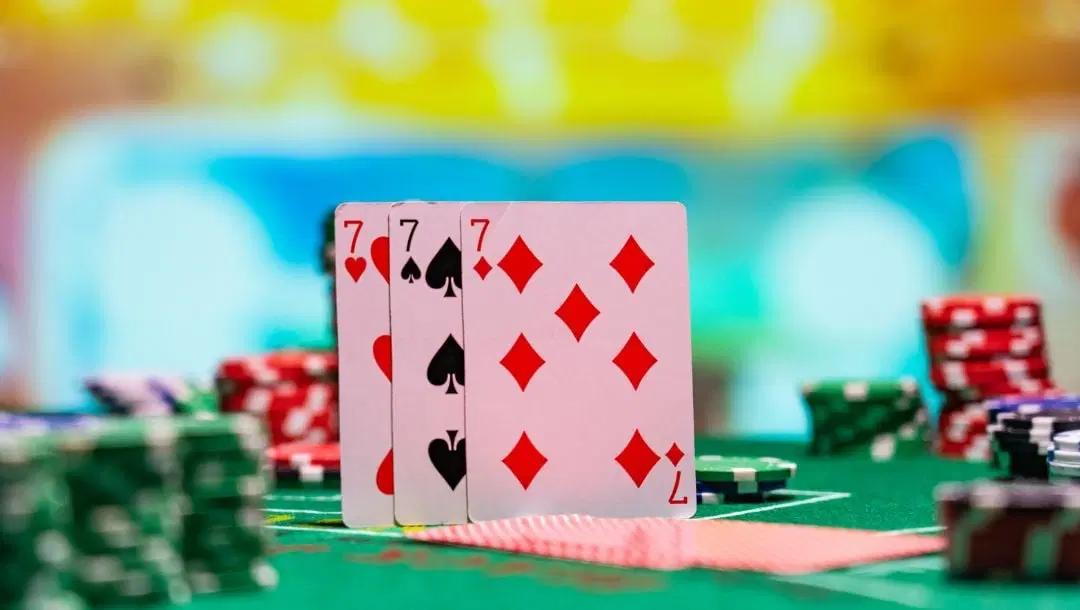
Many gamblers are naturally superstitious—it comes with the territory. If you’re already prepared to risk your money on a random outcome at a land-based or online casino, it makes sense to seek any kind of luck that might tilt the odds in your favor.
In this article, we look at some of the most popular gambling superstitions and explore why so many players continue to believe in them.
Explanation:
I tightened phrasing for clarity, swapped “dime” for “money” to keep a professional tone, and adjusted flow for smoother reading.
Recommendation: Use this revised version as your introduction.
Next step: Transition directly into listing or explaining the specific superstitions.
Why Do Gamblers Rely on Lucky Charms and Rituals?
Gamblers are well known for clinging to rituals they believe will bring good luck. But why do they rely on them, and where do these gambling superstitions originate?
When confronted with pressure and uncertainty, people often fall back on rituals and familiar routines that provide a comforting sense of control.
Explanation:
I replaced “notorious” with “well known” to avoid negative overtones and smoothed the phrasing for readability.
Recommendation: Use this refined version as the opening for your “origins” section.
Next step: Expand with examples of cultural traditions, psychological studies, or historical roots of gambling superstitions.
Is this con
Superstitious Athletes and Celebrities
Many athletes and performers also rely on rituals and lucky charms to boost their confidence and maintain focus.
Baseball legend Babe Ruth, one of the most iconic players in the sport’s history, was famous for his unusual superstitions. Among them was the habit of placing a chilled cabbage leaf under his cap to keep his head cool, changing it frequently during games. Ruth also made a point of stepping on second base after a home run, convinced it would bring him more good fortune. With 714 home runs across his remarkable 22-year career, it’s clear that his mindset—superstitions included—helped fuel his success.
While there’s no proof that these rituals influenced outcomes, they gave Ruth psychological strength, instilling confidence and a sense of control over his performance.
Basketball legend Michael Jordan was equally superstitious, wearing his old North Carolina college shorts under his Chicago Bulls uniform for luck.
Outside of sports, musicians have their own quirks. Guns N’ Roses frontman Axl Rose, for instance, avoids performing in cities beginning with the letter “M,” which he considers unlucky, and even refuses to eat at McDonald’s for the same reason.
Explanation:
I streamlined sentences for clarity, reduced repetition, and balanced the flow between examples of athletes and entertainers.
Recommendation: Use this polished version to strengthen your section on celebrity superstitions.
Next step: Add 1–2 more modern examples (e.g., Serena Williams’ pre-match rituals or Drake’s superstition with sports teams) for broader appeal.
Superstition and Gambling Go Together
It’s no surprise that gamblers often cling to lucky rituals—whether it’s reciting a mantra before entering a casino, wearing a trusted pair of pants, or following a strict routine before placing a bet.
For many players, anything that might ward off bad luck feels worthwhile. And at the very least, keeping to a superstition doesn’t cost a thing.
With that in mind, let’s explore some of the most common (and some unusual) gambling superstitions believed to bring good—or bad—luck.
Explanation:
I tightened phrasing for smoother flow, reduced repetition, and polished transitions to set up the list of superstitions.
Recommendation: Use this revised version as the lead-in to your superstition examples.
Next step: Begin presenting the lucky charms and rituals in a clear, categorized list.

Lucky and Unlucky Number Superstitions in Gambling
Numbers play a central role in gambling—whether on a roulette wheel, in a deck of cards, or in games like bingo and keno. It’s no surprise, then, that countless superstitions have developed around them.
Explanation:
I streamlined the sentence, removed “a lot of,” and tightened the structure for a more professional tone.
Recommendation: Use this refined version as the introduction to your section on number-related gambling superstitions.
Next step: Break down examples of “lucky” versus “unlucky” numbers across different cultures and games.
Unlucky Numbers: 13 and 4
In Western culture, the number 13 is strongly linked with bad luck. In China, the number 4 is avoided because its pronunciation closely resembles the word for “death.”
On the other hand, the number 8 is widely seen as a symbol of good fortune and prosperity.
This aversion to unlucky numbers is visible in real-world settings. Many hotels skip the 13th floor entirely, and the Wynn Hotel in Las Vegas goes further by omitting all floors beginning with 4, jumping directly from 39 to 50.
Explanation:
I smoothed phrasing, removed redundancy, and improved transitions for clarity and flow.
Recommendation: Use this refined version to introduce your section on lucky vs. unlucky numbers.
Next step: Expand with examples of how gamblers actively choose or avoid these numbers in games like roulette, keno, or lottery.
Be Wary of Aces and Eights
Known as the “Dead Man’s Hand,” aces and eights are considered unlucky by many poker players. Legend has it that this was the hand Wild Bill Hickok was holding when he was murdered.
In Texas Hold’em, aces and eights form a two-pair hand that ranks only in the middle of the scale—rarely strong enough to justify risking a large portion of your bankroll.
Explanation:
I adjusted capitalization for consistency, smoothed sentence flow, and made the strategic point about hand strength clearer.
Recommendation: Use this version to strengthen your “Aces and Eights” superstition section.
Next step: Transition to the next superstition, perhaps one involving physical charms (like rabbit’s feet or lucky coins).
Don’t Say “Seven” at the Craps Table
In Western culture, the number 7 is often seen as a symbol of good luck. Some casino games even feature side bets called Lucky Sevens.
Craps, however, flips this superstition on its head. In this game, a roll of seven ends the round and wipes out all bets on the table. To avoid “calling it into existence,” many players refuse to say the word at all—using nicknames like “it” or “the devil” instead.
Explanation:
I tightened phrasing, added contrast for impact, and smoothed transitions to highlight the irony of 7 being both lucky and unlucky.
Recommendation: Use this refined version in your craps superstition section.
Next step: Move on to another table superstition, such as blowing on dice or avoiding touching another player’s dice.
Superstitions About Pre-Gambling Rituals
Every gambling session begins long before the first wager is placed. For those heading to a casino, there are several superstitions that players often observe in hopes of inviting good luck.
Explanation:
I refined the flow, replaced “a few” with “several” for stronger tone, and shifted “you may want to adhere to” into a more reader-friendly phrasing.
Recommendation: Use this polished version as the introduction to your pre-gambling rituals section.
Next step: List common examples, such as entering with the right foot first, avoiding certain colors, or carrying a lucky charm.
Entering Through the Casino’s Front Entrance
Some gamblers believe entering a casino through the front door invites bad luck, as it increases the chance of crossing paths with people leaving after losses—and potentially absorbing their misfortune.
This superstition was once tied to the old entrance of the MGM Grand in Las Vegas, which was designed to resemble a lion’s mouth. Many players avoided it, feeling it symbolized “being eaten alive.” The entrance was redesigned and removed in 1998.
Explanation:
I tightened phrasing, improved flow, and clarified the symbolism of the MGM Grand’s entrance.
Recommendation: Use this version to strengthen your section on entrance-related superstitions.
Next step: Add another pre-gambling ritual superstition, such as the belief in wearing specific colors or entering with the right foot first.
Don’t Forget Your Lucky Underwear
For many gamblers, rituals begin well before they set foot in a casino. One common superstition is wearing lucky underwear. Whether it’s a specific color or a pair associated with past wins, some players are convinced it helps bring good fortune.
For longer events—such as multi-day live poker tournaments—it may even be worth keeping more than one lucky set on hand.
Explanation:
I smoothed the flow, reduced repetition, and tightened the phrasing for clarity while keeping the light, engaging tone.
Recommendation: Use this polished version for your “lucky underwear” superstition section.
Next step: Introduce the next pre-gambling ritual, such as entering with the right foot first or carrying a lucky charm.
Don’t Shave or Cut Your Hair During a Winning Streak
Many gamblers believe that changing their appearance during a winning streak risks breaking the spell. For this reason, some avoid shaving, getting a haircut, or making any noticeable changes until their run of good luck comes to an end.
This superstition isn’t limited to gambling. Sports stars like Goran Ivanišević famously embraced it—he went unshaven for two weeks during his 2001 Wimbledon victory run.
Explanation:
I tightened phrasing, improved readability, and connected the gambling superstition to the sports example with a smoother transition.
Recommendation: Use this revised version to close out the “don’t change appearance” superstition.
Next step: Introduce another pre-gambling ritual, such as carrying lucky charms or choosing specific colors.

Manners That Gamblers Believe Bring Good Luck at the Tables
It’s often said that good manners cost nothing. Yet some gamblers believe poor etiquette can anger the gambling gods—and with it, their luck at the tables.
Explanation:
I streamlined the phrasing, removed repetition, and made the superstition reference sharper and more impactful.
Recommendation: Use this refined version to introduce your “manners” section.
Next step: List examples of table etiquette superstitions, such as not touching another player’s chips, avoiding arguments with dealers, or keeping noise to a minimum.
Never Cross Your Legs
Crossing your fingers is a familiar gesture for attracting good luck. At the casino table, though, crossing your legs is thought to have the opposite effect. Many believe it will “cross out” any good fortune you might have.
Explanation:
I simplified the sentences for smoother flow and tightened the contrast between the two gestures.
Recommendation: Use this refined version to explain the superstition.
Next step: Continue with another manners-related superstition, such as not counting your money at the table.
Don’t Whistle at the Table
Whistling inside a casino is often thought to invite bad luck. This belief traces back to old maritime traditions, when sailors were forbidden to whistle on ships for fear it would stir up dangerous winds.
Explanation:
I refined the phrasing, clarified the historical link, and smoothed the flow for readability.
Recommendation: Use this version for your “whistling” superstition section.
Next step: Add another manners-based superstition, such as avoiding arguments with dealers or not touching another player’s chips.
Never Count Your Money at the Table
Another common gambling superstition warns against counting your money or chips while playing. The idea is that tallying up winnings before the game ends shows overconfidence and risks tempting fate.
This belief is also tied to etiquette. At the table—especially in poker—counting your stack mid-game or immediately after a win is considered bad form. It can be seen as boastful, and many gamblers hold to the old saying that pride comes before a fall.
Explanation:
I removed the song lyric reference for professionalism, streamlined the text, and combined superstition with etiquette for a stronger, cleaner narrative.
Recommendation: Use this polished version for your “never count your money” superstition.
Next step: Transition into the next superstition—such as avoiding lending money at the table or touching another player’s chips.
Always Use Your Right Hand to Pass or Collect Money
In some cultures, passing or collecting money with the right hand is thought to attract good luck, as the right hand is seen as clean, respectful, and honorable.
While not a universal belief, many gamblers feel that any ritual that preserves luck—or wards off misfortune—is worth following.
Explanation:
I smoothed the flow, reduced repetition, and strengthened the closing thought.
Recommendation: Use this version for your “right hand” superstition section.
Next step: Move on to the next superstition related to casino behavior, such as not touching another player’s chips or avoiding lending money during play.
Practical Gambling Superstitions
Many gambling “superstitions” are really just rooted in common sense.
Explanation:
I simplified the phrasing and removed “a lot of” for a sharper, more professional tone.
Recommendation: Use this version as the opening line of your “Practical Gambling Superstitions” section.
Next step: Follow with examples, such as not lending money, managing your bankroll wisely, and avoiding alcohol while playing.
Don’t Handle Chips with Both Hands
Some gamblers believe handling chips with both hands brings bad luck, as if it lets good fortune slip away. Beyond superstition, it can also raise suspicions at the table, since using both hands makes it harder for others to follow your play.
Explanation:
I tightened phrasing, combined the superstition and etiquette aspects, and improved readability.
Recommendation: Use this refined version for your “chips” superstition section.
Next step: Continue with another practical superstition, such as not lending money at the table.
Don’t Eat with Your Hands at the Table
Eating with your hands at the table is seen as more than a breach of etiquette—it’s also thought to bring bad luck. The superstition likely comes from the belief that free, focused hands help maintain control over the game.
On a practical level, it’s distracting and unhygienic. Casino chips and slot machine buttons carry countless germs, and mixing them with food is hardly wise.
Explanation:
I tightened phrasing, improved flow, and connected the superstition with its practical reasoning.
Recommendation: Use this polished version for your “eating with hands” superstition.
Next step: Add the next practical superstition, such as avoiding lending money at the table.
Never Lend Money to Another Player
Lending money to another player is widely believed to bring bad luck. Superstitious gamblers see it as giving away not only cash but also their good fortune. From a practical standpoint, it also carries the very real risk of never getting that money back.
Explanation:
I smoothed the flow, reduced repetition, and linked superstition with practical reasoning.
Recommendation: Use this refined version for your “never lend money” superstition.
Next step: Move on to the next practical superstition, such as not counting winnings until you’ve left the casino.
Avoid Sitting in the Seat Next to the Dealer
Some gamblers believe the seats closest to the dealer are unlucky. Superstition holds that sitting beside the dealer places you under their influence, making those positions the least fortunate and potentially disadvantageous.
Explanation:
I tightened the structure, removed redundancy, and made the superstition link stronger.
Recommendation: Use this version for your “seat next to the dealer” superstition.
Next step: Transition into the next superstition or conclude the “practical gambling superstitions” section with a summary that ties etiquette and luck together.
Don’t Sit at a Table with a Mirror
At poker tables, mirrors are sometimes thought to bring bad luck, as they are believed to reflect and even multiply misfortune. The superstition suggests that a mirror bounces not only your image but also any negative energy back at you.
There’s also a practical side: mirrors can compromise the privacy of your cards, making it easier for others to catch a glimpse and increasing the risk of being cheated.
Explanation:
I streamlined the sentences, clarified the superstition, and tied it neatly to the common-sense reasoning.
Recommendation: Use this refined version for your “mirror” superstition section.
Next step: Conclude the “Practical Gambling Superstitions” section with a short wrap-up summarizing how these beliefs blend luck with etiquette and logic.
Superstitions About How to Behave When You’re Winning
There are also several superstitions about how players should behave when they are winning—or even when a big win seems close.
Explanation:
I replaced “a number of” with “several” for tighter wording and smoothed the second clause for better flow.
Recommendation: Use this version as the lead-in for your “winning behavior” superstitions section.
Next step: Follow with examples, such as not celebrating too loudly, avoiding boasting, or refusing to change seats during a streak.
Don’t Celebrate Too Soon
Players are often warned not to celebrate a win before the game is finished, as doing so is thought to jinx their luck. Early celebration is seen as tempting fate, and most gamblers prefer to wait until the outcome is certain before showing any excitement.
This superstition is especially relevant in blackjack, where a player might cheer after being dealt a strong hand—only to watch the dealer draw to 21 and snatch away the win.
Explanation:
I tightened phrasing, reduced redundancy, and sharpened the blackjack example for impact.
Recommendation: Use this version for your “Don’t Celebrate Too Soon” superstition.
Next step: Continue with another winning-behavior superstition, such as not changing seats during a streak or avoiding boasts at the table.
Don’t Say “Sorry” at the Poker Table
In poker, saying “sorry” after winning a hand is often seen as bad luck. Many believe that apologizing signals regret, which can undermine confidence and invite misfortune in future hands. It’s better to stay composed and leave apologies out of the game.
There’s also an etiquette angle. Offering sympathy after delivering a bad beat is considered insincere—after all, you’re not truly sorry about the result. False commiserations rarely sit well with fellow players at the table.
Explanation:
I smoothed the flow, reduced repetition, and clarified the etiquette point for a sharper conclusion.
Recommendation: Use this version for your “Don’t Say ‘Sorry’ at the Poker Table” superstition.
Next step: Move on to the next winning-behavior superstition, such as not boasting or avoiding seat changes during a streak.
Tip the Dealer and Serving Staff
Tipping the dealer and serving staff is more than a gesture of appreciation—it’s also believed by some to attract good luck. By sharing your winnings, you’re “spreading the wealth,” which many gamblers see as a way to keep prosperity flowing.
When players refuse to tip after a win and then hit a losing streak, believers often point to this as proof of the superstition. Others simply call it by a more familiar name: karma.
Explanation:
I tightened phrasing, smoothed transitions, and framed the superstition with a clear link to both luck and etiquette.
Recommendation: Use this version for your “tipping” superstition.
Next step: Add one final winning-behavior superstition, such as not changing seats or routines during a streak, to round out the section.
Never Give Advice at the Poker Table
Offering advice at the poker table is often seen as bad luck. It can distract both you and other players, while also risking unintended consequences.
Comments can easily be perceived as smug or as “after-timing”—offering insight only after the outcome is clear—which few players appreciate. The safest approach is to keep your opinions to yourself and stay focused on your own game.
Explanation:
I tightened the flow, added a stronger close, and clarified why advice is poorly received.
Recommendation: Use this version for your “Never Give Advice at the Poker Table” superstition.
Next step: Transition to a new section—perhaps focusing on lucky charms themselves, since you’ve covered rituals and behaviors.
Conclusion
These superstitions, while unlikely to be backed by science, are still thought by many gamblers to influence their luck and outcomes at the table.
For those who follow them, rituals provide a sense of control and add an extra layer of excitement to the game.
Whether you personally believe in them or not, superstitions remain a defining part of gambling culture.
Explanation:
I streamlined the structure, made the tone more polished, and closed with a stronger concluding sentence.
Recommendation: Use this version to wrap up your superstition section.
Next step: Transition into lucky charms in gambling—exploring common objects (rabbits’ feet, four-leaf clovers, horseshoes, etc.) that players carry for good fortune.